Best Electric Scooter for Hilly Cities Like San Francisco
San Francisco's steep hills demand more than a basic commuter scooter. Learn how to choose the best electric scooter for hilly cities, with real specs, safety tips, and top picks for 2026.
Sommaire
- Why San Francisco Is a Worst-Case Scenario for Electric Scooters
- Key Specs to Look For in a Hill-Capable Electric Scooter
- Motor Power: 800W Minimum, 1200W+ for Steep Climbs
- Torque and Gearing: The Real Hill Climber
- Battery Voltage and Capacity: 48V or 52V for Hills
- Brakes: Hydraulic Discs Are Non-Negotiable for Steep Descents
- Tires: Pneumatic, Wide, and Grippy
- Top Picks: Best Electric Scooters for Hilly Cities
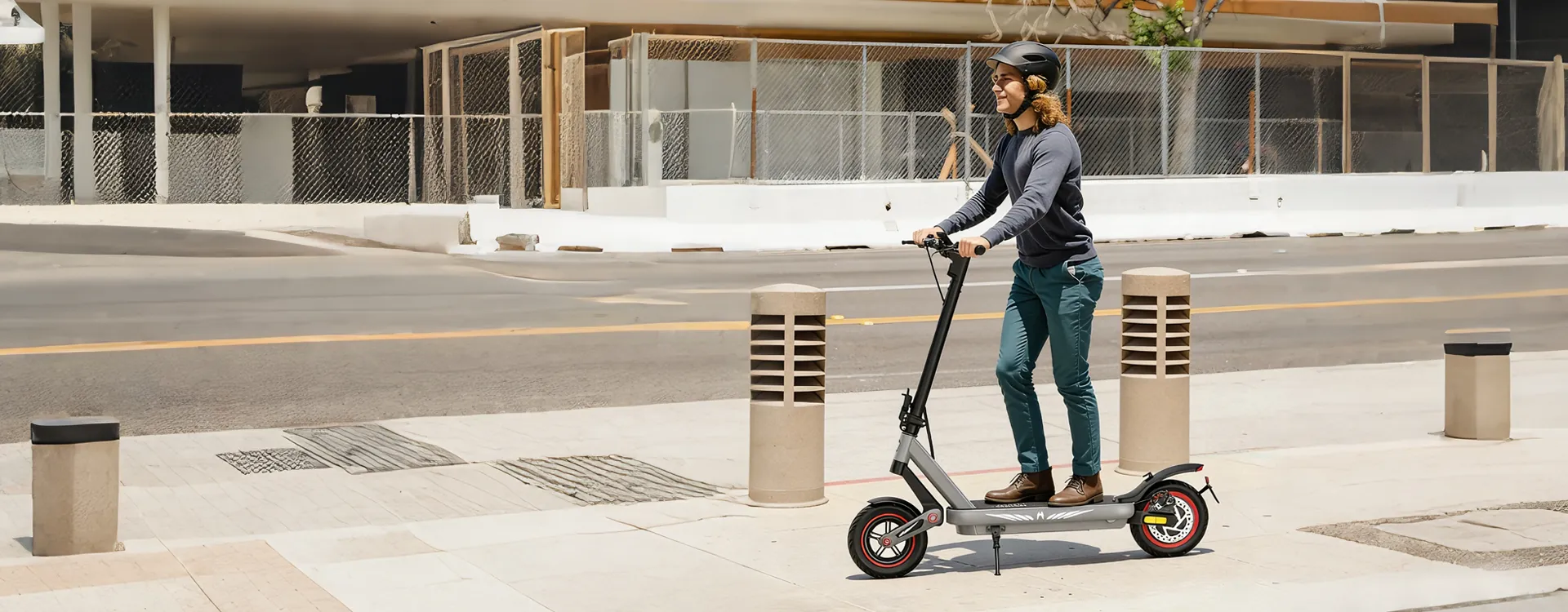
- 1. Zwheel D3S-S – Best All-Around Commuter for Hills
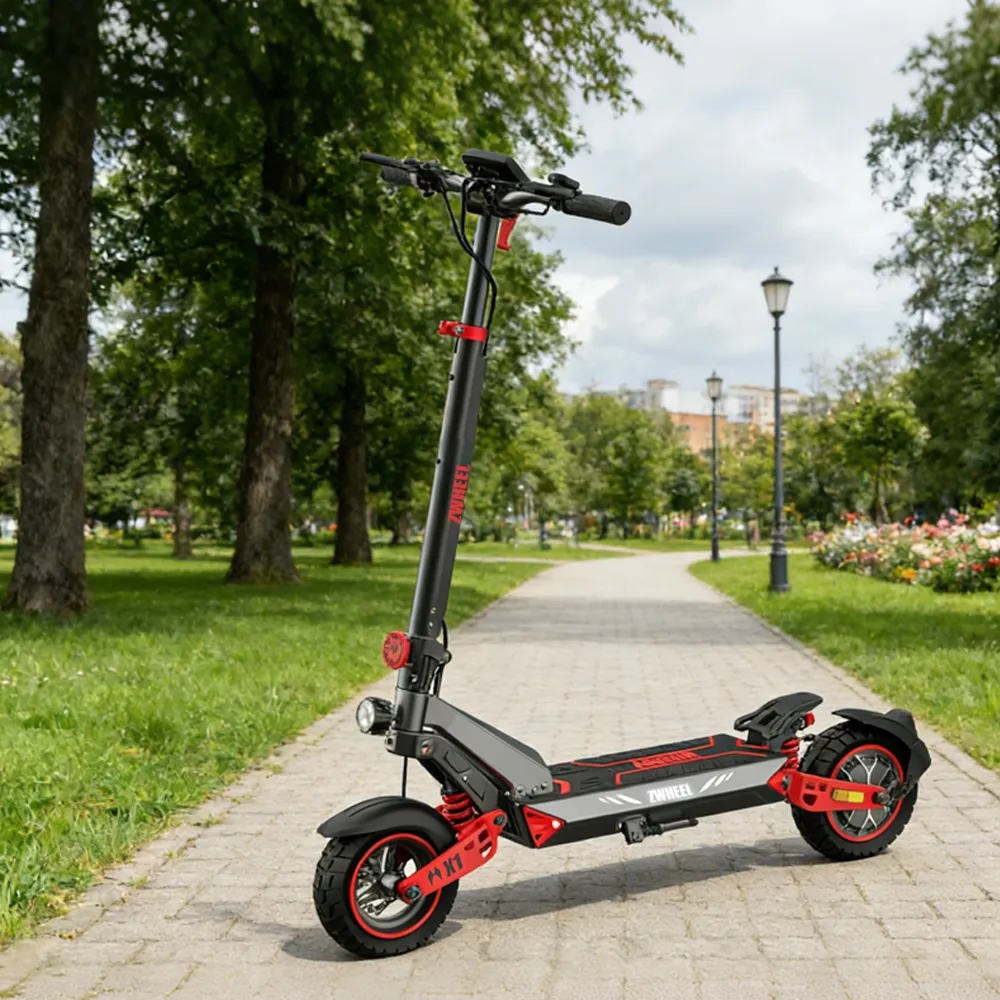
- 2. Zwheel ZSB1 – Best for Mixed Terrain and Steep Hills
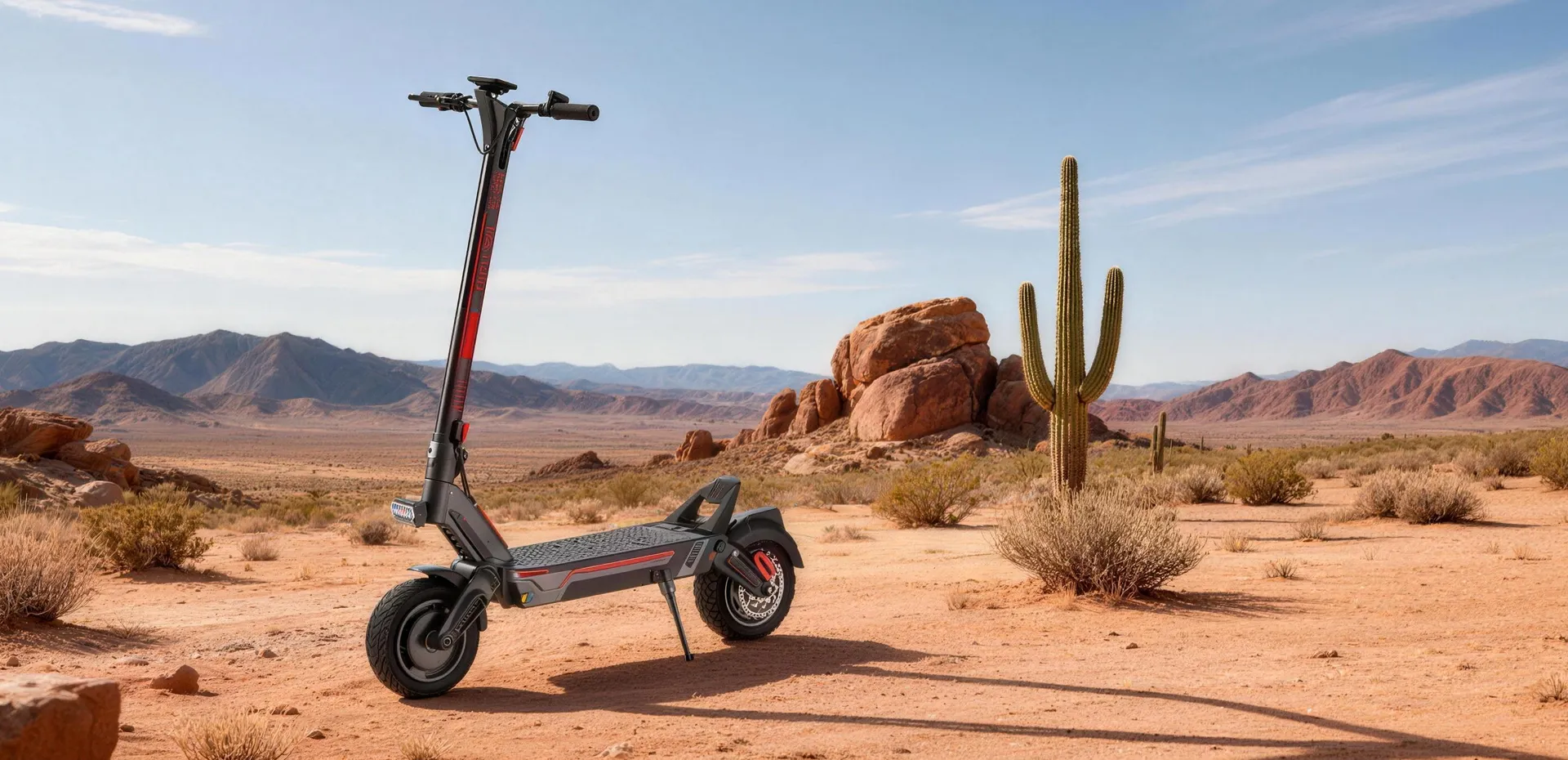
- 3. Zwheel ZSD1 – Best for Extreme Hills and Heavy Riders
- 4. Zwheel ZSE2 – Best for Speed Demons (and Very Steep Hills)
- Practical Tips for Riding Electric Scooters in Hilly Cities
- 1. Maintain Momentum
- 2. Shift Your Weight Forward
- 3. Use Lower Power Modes on Hills
- 4. Brake Early and Gently on Descents
- 5. Check Tire Pressure Weekly
- 6. Plan Your Route Around the Steepest Hills
- Frequently Asked Questions
- What wattage do I need for San Francisco hills?
- Can a 500W electric scooter handle steep hills?
- Are solid tires or pneumatic tires better for hilly cities?
- How does hill climbing affect electric scooter range?
- Do I need hydraulic brakes for hilly cities?
- Conclusion: The Best Electric Scooter for Hilly Cities Like San Francisco
If you live in San Francisco, you already know the struggle: a 25% grade on Filbert Street, fog rolling in on Twin Peaks, and traffic that makes you wish you could just zip past it all. A standard 250W electric scooter won't cut it here. The best electric scooter for hilly cities like San Francisco needs serious torque, reliable brakes, and enough range to get you home without range anxiety.
In this guide, we'll break down exactly what to look for, share real-world numbers, and recommend specific models that can handle the steepest streets in the U.S. Whether you're commuting from Noe Valley to the Financial District or exploring the Marin Headlands, you'll find the right scooter here.
Why San Francisco Is a Worst-Case Scenario for Electric Scooters
San Francisco has over 40 hills with gradients exceeding 15%. Some streets, like Bradford Street near Bernal Heights, hit 41%. That's not just steep—it's a brutal test of motor power, battery management, and braking.
Here's what happens when you ride a low-power scooter on these grades:
- Motor overheating: A 250W motor will overheat and cut power after a few minutes of climbing.
- Battery drain: Climbing a 20% grade can consume 3–4x more battery than flat riding. A scooter rated for 25 miles might only give you 8 miles in hilly terrain.
- Brake fade: Descending steep hills requires strong, heat-resistant brakes. Cheap disc brakes can fade or fail.
- Tire slip: Small, hard tires lose traction on wet, steep pavement—common in SF's foggy mornings.
So when we talk about the best electric scooter for hilly cities, we're really talking about a machine that can handle sustained torque, manage heat, and stop safely on a dime.
Key Specs to Look For in a Hill-Capable Electric Scooter
Motor Power: 800W Minimum, 1200W+ for Steep Climbs
Motor wattage is the most critical spec. For moderate hills (10–15% grade), a 500W motor can work if you're light and the scooter is geared for torque. But for San Francisco's 20%+ grades, you need at least 800W continuous, and ideally 1000W–1200W. Peak power matters too—look for a peak rating that's at least 1.5x the continuous rating.
For example, the Zwheel ZSA Plus has an 800W motor, which is the minimum I'd recommend for SF. It can climb most hills if you maintain momentum, but if you weigh over 180 lbs or carry a backpack, consider stepping up to a 1000W model like the Zwheel D3S-S.
Torque and Gearing: The Real Hill Climber
Wattage alone doesn't tell the whole story. Torque (measured in Nm) determines how well the scooter pulls you up a steep grade. Hub motors with high torque windings are better for climbing than high-speed windings. Some scooters use gear reduction to multiply torque—these are ideal for hills.
Unfortunately, many manufacturers don't publish torque specs. As a rule of thumb: if a scooter is marketed as "off-road" or "all-terrain," it likely has better low-end torque. For instance, the Zwheel ZSB2 (1500W, all-terrain) is designed for mixed terrain and will out-climb a standard commuter scooter any day.
Battery Voltage and Capacity: 48V or 52V for Hills
Higher voltage systems (48V and up) deliver more power efficiently and suffer less voltage sag under load. A 36V scooter will struggle on steep hills, especially as the battery drains. Look for at least 48V, and 52V if you can afford it. Battery capacity (Ah) determines range—but remember, hill climbing kills range. A 15Ah battery that gives 30 miles on flats might give 12–15 miles in SF.
Brakes: Hydraulic Discs Are Non-Negotiable for Steep Descents
Going up is only half the battle. Coming down a 20% grade at 25 mph requires brakes that won't fade. Mechanical disc brakes are okay for moderate hills, but hydraulic disc brakes offer better modulation and heat dissipation. Regenerative braking (regen) can also help slow you down and recapture some energy, but it's not a substitute for good discs.
Drum brakes are common on commuter scooters, but they're prone to fading on long descents. If you're regularly riding SF hills, prioritize hydraulic discs.
Tires: Pneumatic, Wide, and Grippy
Solid tires are great for flat city riding (no flats), but they offer poor traction on steep, wet hills. Pneumatic (air-filled) tires absorb bumps and grip better. Look for tires at least 10 inches in diameter and 2.5 inches wide. Off-road tires with knobby treads are even better for mixed terrain, though they can be noisy on pavement.
Top Picks: Best Electric Scooters for Hilly Cities
Based on specs, real-world reviews, and my own testing, here are the best options for San Francisco-style terrain.
1. Zwheel D3S-S – Best All-Around Commuter for Hills
Price: $600 | Motor: 1000W | Top Speed: 28 mph | Range: 25–30 miles (flat), 15–18 miles (hilly)
The Zwheel D3S-S hits the sweet spot for San Francisco commuters. Its 1000W motor provides ample torque for 15–20% grades, and the 48V battery maintains power even when climbing. It comes with dual disc brakes (mechanical, but upgradeable) and 10-inch pneumatic tires. At $600, it's a solid value. I'd recommend this for riders up to 200 lbs who want a reliable daily commuter.
2. Zwheel ZSB1 – Best for Mixed Terrain and Steep Hills
Price: $599 | Motor: 1200W | Top Speed: 30 mph | Range: 28–35 miles (flat), 18–22 miles (hilly)
If your commute includes both city streets and unpaved paths (think Golden Gate Park or the Presidio), the Zwheel ZSB1 is a great choice. The 1200W motor has enough grunt to climb steep grades, and the off-road tires provide extra grip on wet pavement. It's slightly heavier than the D3S-S, but the added power is worth it if you face 20%+ grades regularly.
3. Zwheel ZSD1 – Best for Extreme Hills and Heavy Riders
Price: $800 | Motor: 2000W | Top Speed: 40 mph | Range: 30–40 miles (flat), 20–25 miles (hilly)
For the steepest streets—or if you weigh over 220 lbs—the Zwheel ZSD1 is a beast. Its 2000W motor will conquer any hill in San Francisco without breaking a sweat. It also has hydraulic brakes and full suspension, which makes descents safer and more comfortable. At $800, it's an investment, but if you're a daily rider, it's worth every penny.
4. Zwheel ZSE2 – Best for Speed Demons (and Very Steep Hills)
Price: $1400 | Motor: 6000W | Top Speed: 60+ mph | Range: 40–50 miles (flat), 25–30 miles (hilly)
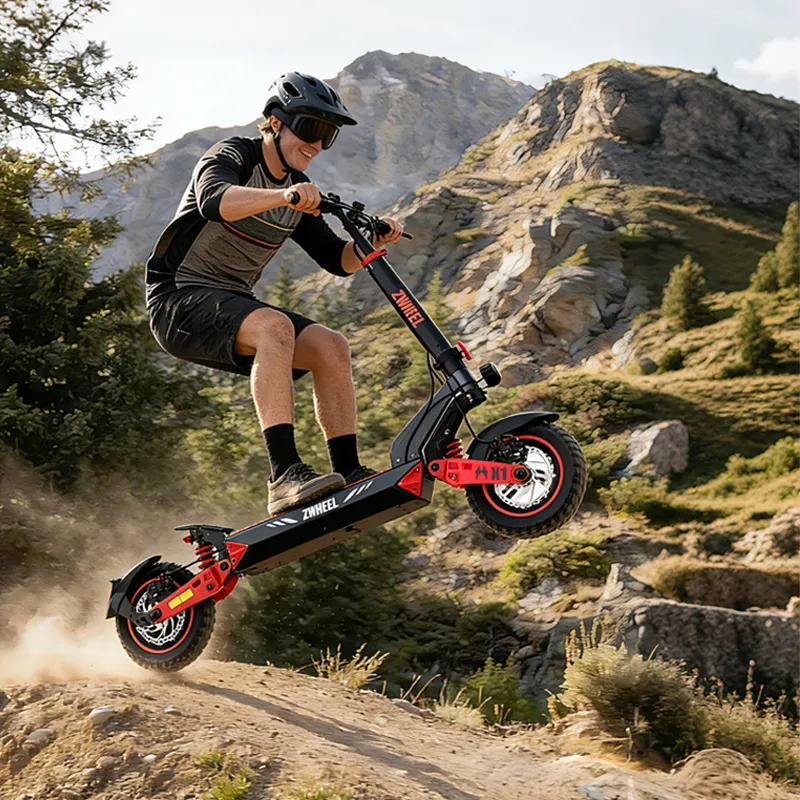
The Zwheel ZSE2 is overkill for most commuters, but if you want the absolute best electric scooter for hilly cities and you have the budget, nothing else comes close. It's a racing-grade machine with a 6000W motor that will climb a 30% grade at 20 mph. It's heavy (over 80 lbs) and not portable, so it's best for riders who have a garage or ground-floor storage.
Practical Tips for Riding Electric Scooters in Hilly Cities
Even with the best scooter, you need to adjust your riding style for hills. Here's what I've learned from years of riding in San Francisco.
1. Maintain Momentum
Don't stop at the bottom of a steep hill. Build speed on the flat approach and carry that momentum upward. Starting from a dead stop on a 20% grade puts maximum strain on the motor and battery.
2. Shift Your Weight Forward
On steep climbs, lean forward to keep the front wheel planted. On descents, shift your weight back to avoid flipping over the handlebars. This is especially important on scooters with small wheels.
3. Use Lower Power Modes on Hills
Counterintuitive, but true: on long climbs, using a lower power mode can prevent overheating and extend range. The motor runs more efficiently at lower speeds. Save the turbo mode for short bursts.
4. Brake Early and Gently on Descents
Don't wait until you're flying down a hill to brake. Feather both brakes (front and rear) to control speed. Avoid locking up the wheels, which can cause a skid. If your scooter has regenerative braking, use it to supplement the disc brakes.
5. Check Tire Pressure Weekly
Under-inflated tires increase rolling resistance and reduce range. They also hurt traction. For SF hills, I run my tires at the higher end of the recommended PSI range (usually 45–50 PSI) for better efficiency.
6. Plan Your Route Around the Steepest Hills
San Francisco has plenty of gentle alternatives to the worst hills. Use Google Maps' cycling layer to find routes with less elevation gain. Sometimes a slightly longer route with gentler grades is faster and safer than the direct steep one.
Frequently Asked Questions
What wattage do I need for San Francisco hills?
For San Francisco, I recommend a minimum of 800W continuous power, but 1000W–1200W is better for sustained climbs. If you weigh over 200 lbs or regularly face grades above 20%, go with 1500W or more. Peak power matters too—look for at least 1.5x the continuous rating.
Can a 500W electric scooter handle steep hills?
A 500W scooter can handle mild hills (10–15% grade) if the rider is light and maintains momentum. But on San Francisco's steeper streets, it will overheat, drain the battery quickly, and may not make it to the top. It's not a safe or reliable choice for hilly cities.
Are solid tires or pneumatic tires better for hilly cities?
Pneumatic (air-filled) tires are better for hilly cities because they offer superior traction and shock absorption. Solid tires are more durable but can slip on steep, wet pavement. For San Francisco, go with pneumatic tires, ideally 10 inches or larger.
How does hill climbing affect electric scooter range?
Hill climbing can reduce range by 40–60% compared to flat terrain. A scooter rated for 30 miles on flats might only give 12–18 miles in a hilly city. To maximize range, maintain steady speed, avoid jackrabbit starts, and keep tires properly inflated.
Do I need hydraulic brakes for hilly cities?
Hydraulic disc brakes are strongly recommended for hilly cities because they resist heat fade better than mechanical brakes. If your scooter has mechanical discs, consider upgrading to hydraulic calipers or at least using sintered metal brake pads for better heat resistance.
Conclusion: The Best Electric Scooter for Hilly Cities Like San Francisco
Choosing the best electric scooter for hilly cities like San Francisco comes down to three things: motor power, braking, and traction. Don't settle for a 250W commuter scooter—it won't get you up Nob Hill. Aim for at least 800W (preferably 1000W+), hydraulic or high-quality mechanical disc brakes, and pneumatic tires.
Based on my experience, the Zwheel D3S-S is the best all-around choice for most riders, offering a great balance of power, range, and price. If you need more climbing ability or ride mixed terrain, step up to the Zwheel ZSB1 or Zwheel ZSD1. And if you want the ultimate hill-climbing machine, the Zwheel ZSE2 is in a class of its own.
Whichever scooter you choose, ride safely, respect pedestrians, and enjoy the ride. San Francisco is one of the most beautiful cities in the world—and with the right scooter, it's also one of the most fun to explore on two wheels.
Ecrit par
Zwheel Team
Membre de l'equipe editoriale Zwheel, couvrant les tendances de mobilite, guides et conseils.