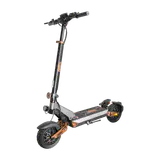
Best Electric Scooter for Short Commute Under 5 Miles (2026)
Commutes under 5 miles don't need a 60-mile range or a 70 lb scooter. Here's how to pick the best electric scooter for a short commute, with real numbers, top picks, and money-saving tips for 2026.

Sommaire
- Why a Short Commute Changes Everything
- What Actually Matters for a Commute Under 5 Miles
- 1. Real-World Range, Not Spec Sheet Range
- 2. Weight Is the Hidden Commute Killer
- 3. Top Speed: You Need Less Than You Think
- 4. Braking and Tires Matter More Than Motor Watts
- How Much Should You Spend?
- Top Picks for Short Commutes in 2026
- Best Overall Value: Zwheel ZSA Plus
- Best Step-Up: Zwheel D3S-S
- Best for Mixed Terrain Commutes: Zwheel ZSB1
- The Real Cost of Scooter Commuting
- Practical Tips for Short Commute Riders
- Charge to 80% for Daily Use
- Store Indoors in Winter
- Check Tire Pressure Weekly
- Lock It Properly
- Plan Your Route Around Bike Infrastructure
- Common Mistakes to Avoid
- Frequently Asked Questions
- How much range do I actually need for a 5-mile commute?
- Is a 250W motor enough for a short commute?
- How long does an electric scooter battery last?
- Can I ride an electric scooter in the rain?
- Are electric scooters cheaper than driving for a short commute?
- The Bottom Line
Why a Short Commute Changes Everything
If your daily trip is under 5 miles, you're in the sweet spot for electric scooter commuting. That distance is long enough that walking eats 90 minutes of your day, but short enough that you don't need a heavy, expensive, highway-capable machine. The best electric scooter for short commute under 5 miles is usually lighter, cheaper, and easier to live with than the flagship models you see in YouTube reviews.
That's the core insight most buying guides miss. A 5-mile round trip needs roughly 5–7 miles of real-world range once you account for hills, cold weather, and battery aging. Anything beyond that is headroom — useful, but not worth paying for with extra weight you'll lift onto a train, into an elevator, or up apartment stairs every single day.
This guide breaks down exactly what matters for short commutes in 2026, with real numbers, maintenance costs, and specific recommendations at three budget tiers.
What Actually Matters for a Commute Under 5 Miles
1. Real-World Range, Not Spec Sheet Range
Manufacturers quote range under ideal conditions: 165 lb rider, 77°F, flat ground, eco mode, 9 mph. Your commute is none of those things. A safe rule of thumb is to expect 50–65% of the advertised range in normal riding.
Practical math for a 5-mile round trip:
- Advertised range needed: 10–15 miles minimum
- Comfortable buffer: 20+ miles advertised
- If you charge at work: 8–10 miles advertised is workable
Cold weather is the biggest variable. At 40°F, lithium-ion batteries deliver roughly 70–80% of their warm-weather capacity. If you commute year-round in a cold climate, buy the buffer.
2. Weight Is the Hidden Commute Killer
Here's what nobody tells you: a 55 lb scooter is fine to ride and miserable to own. You'll lift it onto a bus rack, carry it up three stairs, squeeze it into a cubicle, and drag it through a subway turnstile. Do that twice a day for a year and weight becomes the single biggest factor in whether you actually keep commuting by scooter.
Rough guidelines:
- Under 35 lb: Easy to carry one-handed, fine for multimodal commutes
- 35–50 lb: Manageable with two hands, acceptable if you rarely lift it
- 50+ lb: Only if you have ground-floor storage and a dedicated parking spot
3. Top Speed: You Need Less Than You Think
For a 5-mile commute, the difference between 15 mph and 25 mph is about 4 minutes. That's it. Meanwhile, higher top speed usually means more weight, more cost, and more legal complexity.
Speed limits for scooters vary widely by state and city — many U.S. jurisdictions cap scooters at 15–20 mph on bike paths and sidewalks. Check your local rules before buying. A scooter that does 28 mph is only useful if you're legally allowed to ride it that fast where you commute.
4. Braking and Tires Matter More Than Motor Watts
For a short city commute, stopping power and tire quality affect your safety far more than peak wattage. Look for:
- Dual braking (electronic + disc, or dual disc) — single rear brakes are a compromise
- Pneumatic or tubeless tires — solid tires transmit every crack in the pavement to your wrists
- 10-inch wheels minimum for city streets with potholes and curbs
How Much Should You Spend?
For a sub-5-mile commute, the honest answer is: $400–$700 covers almost everyone. Spending $1,400 on a racing-grade scooter for a 3-mile commute is like buying a sports car to drive to the mailbox.
| Budget | What You Get | Best For |
|---|---|---|
| $400–$550 | ~20–25 mi range, 18–22 mph, 35–45 lb | Flat city commutes, first-time buyers |
| $550–$700 | ~25–35 mi range, 22–28 mph, better suspension | Hilly routes, longer detours, heavier riders |
| $700+ | 35+ mi range, 30+ mph, 55+ lb | Only if you also ride for fun on weekends |
Top Picks for Short Commutes in 2026
Best Overall Value: Zwheel ZSA Plus
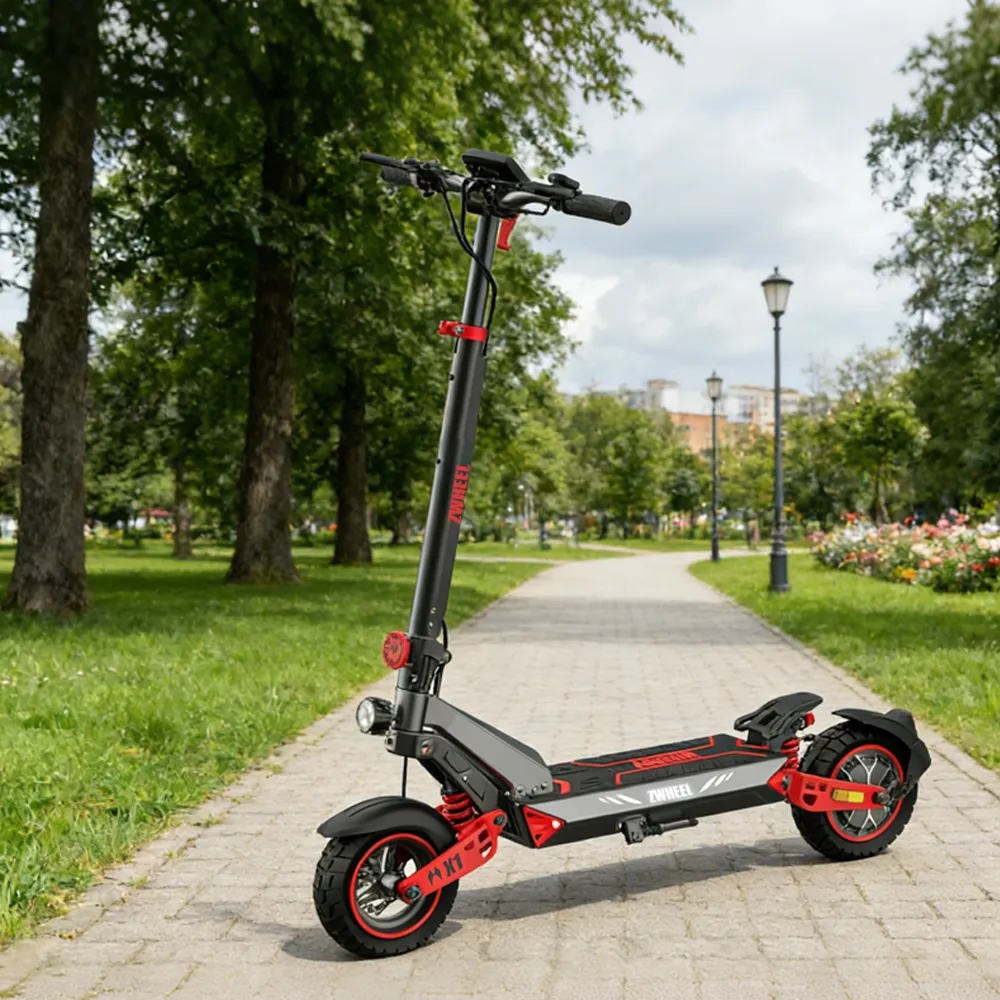
The Zwheel ZSA Plus is the scooter I'd recommend to most people with a 3–5 mile commute. At 800W and $499, it hits the balance point: enough power for moderate hills, a range that comfortably covers a round trip with buffer, and a weight that won't make you dread stairs. It's a commuter-first design — not a toy, not a race machine.
Best Step-Up: Zwheel D3S-S
If your route has real hills or you weigh 200+ lb, the Zwheel D3S-S adds a 1000W motor for $600. That extra 200W makes a noticeable difference climbing grades above 8%, and it holds speed better when you're carrying a backpack. Still firmly in commuter territory, still reasonable to lift.
Best for Mixed Terrain Commutes: Zwheel ZSB1
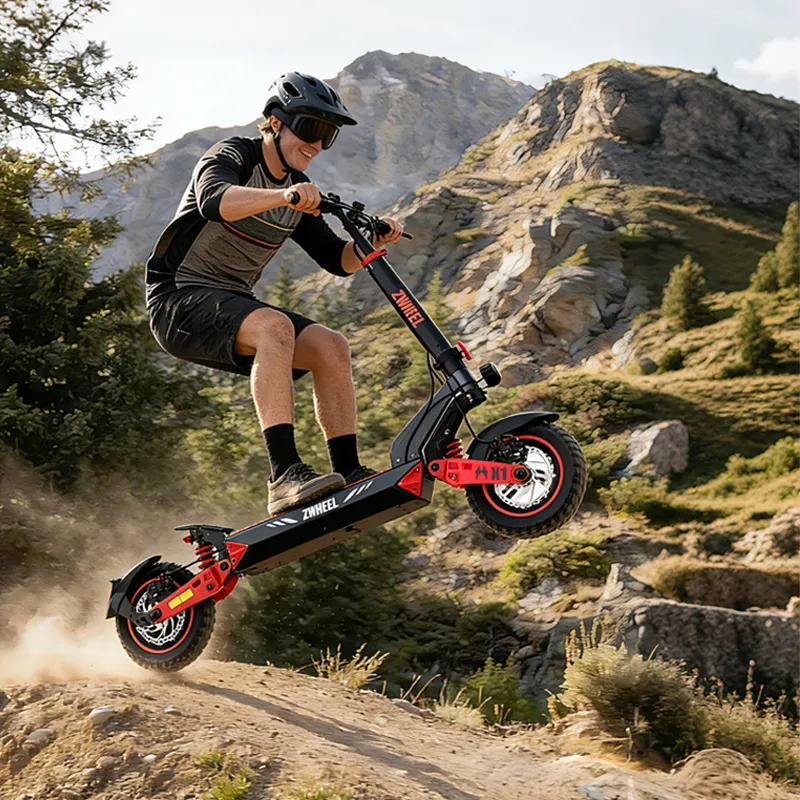
Some commutes aren't pure asphalt — gravel paths, park trails, poorly maintained side streets. The Zwheel ZSB1 at 1200W and $599 handles that mixed surface without forcing you onto a 60 lb off-road tank. If your route includes any unpaved section, this is the smarter pick over a pure city scooter.
The Real Cost of Scooter Commuting
Let's run honest numbers for a 4-mile round trip, 250 commuting days per year (1,000 miles annually):
- Electricity: A 500Wh battery charges for roughly $0.07–$0.12 depending on your rate. At ~20 miles per charge, that's about $3–$6 per year in electricity.
- Tires: Expect to replace tires every 1,500–3,000 miles. Budget $30–$60/year.
- Brake pads: $15–$30/year with regular commuting.
- Battery replacement: Every 2–4 years, $150–$350 — so roughly $60–$120/year amortized.
Total: roughly $110–$215 per year, or about 11–22 cents per mile. Compare that to driving: the IRS mileage rate for 2026 is well above 65 cents per mile. Even accounting for the scooter's purchase price spread over 3 years, you're looking at a fraction of car commuting costs.
Practical Tips for Short Commute Riders
Charge to 80% for Daily Use
Lithium batteries degrade fastest when stored at 100% or 0%. For a commute that uses 30–50% of your battery, charge to 80% on weekdays and do a full balance charge once a week. This can extend battery life by 30–50%.
Store Indoors in Winter
Never leave a scooter in a freezing garage or a hot car. Charging a cold battery damages it permanently. Bring it inside and let it reach room temperature before plugging in.
Check Tire Pressure Weekly
Underinflated tires are the #1 cause of range complaints. A tire at 25 PSI instead of 45 PSI can cut your range by 15–20% and increase puncture risk. A $10 pump pays for itself in a month.
Lock It Properly
Use a U-lock through the frame and rear wheel, not a cable lock through the stem. Cable locks are cut in under 10 seconds. If your commute involves leaving the scooter outside for hours, consider a folding model you can bring inside instead.
Plan Your Route Around Bike Infrastructure
A 5-mile route on protected bike lanes is safer and often faster than a 4-mile route on arterial roads. Check your city's bike map — most have improved significantly since 2023, and many now include scooter-legal paths.
Common Mistakes to Avoid
- Buying for the spec sheet, not the commute. A 40-mile range scooter for a 4-mile trip means carrying 20 extra pounds every day for no benefit.
- Ignoring local regulations. Some cities restrict scooters on sidewalks entirely and require bike-lane use. Know the rules before you buy.
- Skipping safety gear. Helmets aren't optional. At 15 mph, a fall onto concrete causes serious head injuries. Add gloves and knee pads if you ride in traffic.
- Assuming all scooters fold. Many don't, or fold awkwardly. If you need to bring it on transit, verify the folded dimensions.
- Forgetting about charging at work. If your office allows it, a smaller battery is fine. If not, buy the range buffer.
Frequently Asked Questions
How much range do I actually need for a 5-mile commute?
For a 5-mile round trip, look for at least 15 miles of advertised range, or 20+ if you ride in cold weather or on hills. Real-world range is typically 50–65% of the advertised figure, and cold temperatures cut it further. If you can charge at work, 10 miles advertised is workable.
Is a 250W motor enough for a short commute?
On flat ground with a lighter rider, yes — 250W will get you to 15 mph. But for hills, heavier riders, or maintaining speed against wind, 500W or more is noticeably better. Most 2026 commuter scooters in the $400–$700 range use 500–1000W motors, which is the practical sweet spot.
How long does an electric scooter battery last?
A quality lithium-ion battery lasts 500–1,000 full charge cycles, which translates to roughly 2–4 years of daily commuting. Charging to 80% instead of 100% and avoiding extreme temperatures can push that toward the upper end of the range.
Can I ride an electric scooter in the rain?
Most commuter scooters carry an IPX4 or IPX5 rating, meaning they resist splashes but not submersion. Light rain is generally fine if you dry the scooter afterward and avoid deep puddles. Heavy rain increases slip risk and can void warranties — check your model's specific IP rating before riding wet.
Are electric scooters cheaper than driving for a short commute?
Significantly. A 1,000-mile annual scooter commute costs roughly $110–$215 per year in electricity, tires, brakes, and amortized battery replacement — about 11–22 cents per mile. Driving the same distance costs well over 65 cents per mile once you factor in fuel, maintenance, and depreciation.
The Bottom Line
The best electric scooter for a short commute under 5 miles isn't the fastest or the most powerful — it's the one you'll actually use every day. Prioritize a weight you can lift, a range with a 2x buffer over your round trip, dual braking, and 10-inch pneumatic tires. Spend $400–$700, not $1,400.
If you want a starting point, the Zwheel ZSA Plus covers most short city commutes at $499, and the D3S-S adds hill-climbing headroom for $600. Match the scooter to your actual route — not to the most impressive spec sheet — and you'll still be commuting on it a year from now.
Ecrit par
Zwheel Team
Membre de l'equipe editoriale Zwheel, couvrant les tendances de mobilite, guides et conseils.