Electric Scooter with Best Suspension for Rough Roads (2026 Guide)
Rough roads, potholes, and cracked pavement don't have to rattle your ride. Learn how suspension systems work and which electric scooters handle rough terrain best in 2026.
Содержание
- Why Suspension Is the Most Overlooked Spec on an Electric Scooter
- How Electric Scooter Suspension Actually Works
- Front Fork Suspension
- Rear Suspension
- Hydraulic vs. Spring Damping
- Dual-Arm vs. Single-Arm Designs
- What to Look For in a Rough-Road Scooter
- Best Suspension Electric Scooters for Rough Roads in 2026
- Best for City Commuting on Cracked Pavement
- Best for Mixed Terrain and Light Off-Road
- Best for Serious Off-Road and Mountain Trails
- Real Numbers: What Suspension Travel Means in Practice
- Practical Tips for Riding Rough Roads
- Frequently Asked Questions
- Is dual suspension really necessary for rough roads?
- Can I ride an electric scooter on gravel or dirt roads?
- How much should I spend on a scooter with good suspension?
- Does suspension affect battery range?
- How often should I service scooter suspension?
- Final Thoughts
Why Suspension Is the Most Overlooked Spec on an Electric Scooter
When most riders shop for an electric scooter, they obsess over top speed, motor wattage, and battery range. But ask anyone who commutes daily over cracked asphalt, brick-paved streets, or gravel service roads, and they'll tell you the same thing: the electric scooter with the best suspension for rough roads is the one you can actually ride for 45 minutes without your knees filing a complaint.
Suspension is what separates a scooter that feels like a shopping cart from one that glides. In 2026, suspension technology has matured significantly — dual-arm systems, hydraulic dampers, and coil-over designs that once belonged to premium models are now showing up on mid-range scooters. This guide breaks down how suspension actually works, what to look for, and which models deliver the smoothest ride on rough terrain.
How Electric Scooter Suspension Actually Works
At its core, scooter suspension does three jobs: absorb impacts, keep the tires in contact with the ground, and reduce vibration transferred to the frame and rider. Not all suspension is created equal, though. Here's what you'll encounter at different price points.
Front Fork Suspension
Most scooters have some form of front suspension — typically a spring fork or a swingarm with a coil spring. Front suspension handles the first impact when your wheel hits an obstacle, which is why even budget scooters usually include it. The catch: cheap front forks often have no damping, so they bounce rather than absorb.
Rear Suspension
Rear suspension is where things get interesting. When you hit a pothole, the rear wheel takes the secondary impact, and without rear suspension, that energy travels straight up through the deck into your feet and spine. Many entry-level scooters skip rear suspension entirely to cut costs — a major reason they feel harsh on rough roads.
Hydraulic vs. Spring Damping
Springs store energy; dampers control how that energy releases. A spring-only suspension will oscillate after an impact, causing a bouncy, unstable feel. Hydraulic (oil-filled) dampers dissipate that energy smoothly, which is why hydraulic suspension is the gold standard for rough terrain. Some high-end models even offer adjustable preload and rebound damping so you can tune the ride to your weight and road conditions.
Dual-Arm vs. Single-Arm Designs
Dual-arm suspension uses two parallel arms per wheel for greater lateral rigidity and more consistent travel. Single-arm designs are lighter and cheaper but can flex under hard cornering. For rough roads where wheels are constantly moving, dual-arm setups generally track better and feel more planted.
What to Look For in a Rough-Road Scooter
Suspension alone doesn't guarantee a smooth ride. Several factors work together. Here's a quick checklist:
- Suspension travel: Look for at least 50–80mm of travel for urban rough roads; 100mm+ for off-road or gravel.
- Tire size and type: 10-inch pneumatic tires absorb more than 8-inch solid tires. Off-road models often use 10–11 inch knobby or hybrid tires.
- Deck clearance: Higher clearance prevents bottoming out on speed bumps and curbs.
- Frame material: Forged aluminum or steel frames flex less and hold up better over thousands of rough-road miles.
- Weight capacity: Heavier riders need stiffer springs and higher load ratings to avoid bottoming out.
- Braking: Rough roads demand reliable stopping — hydraulic disc brakes paired with electronic braking are ideal.
Best Suspension Electric Scooters for Rough Roads in 2026
Based on suspension design, real-world ride quality, and value, here are the standouts across different categories and budgets.
Best for City Commuting on Cracked Pavement
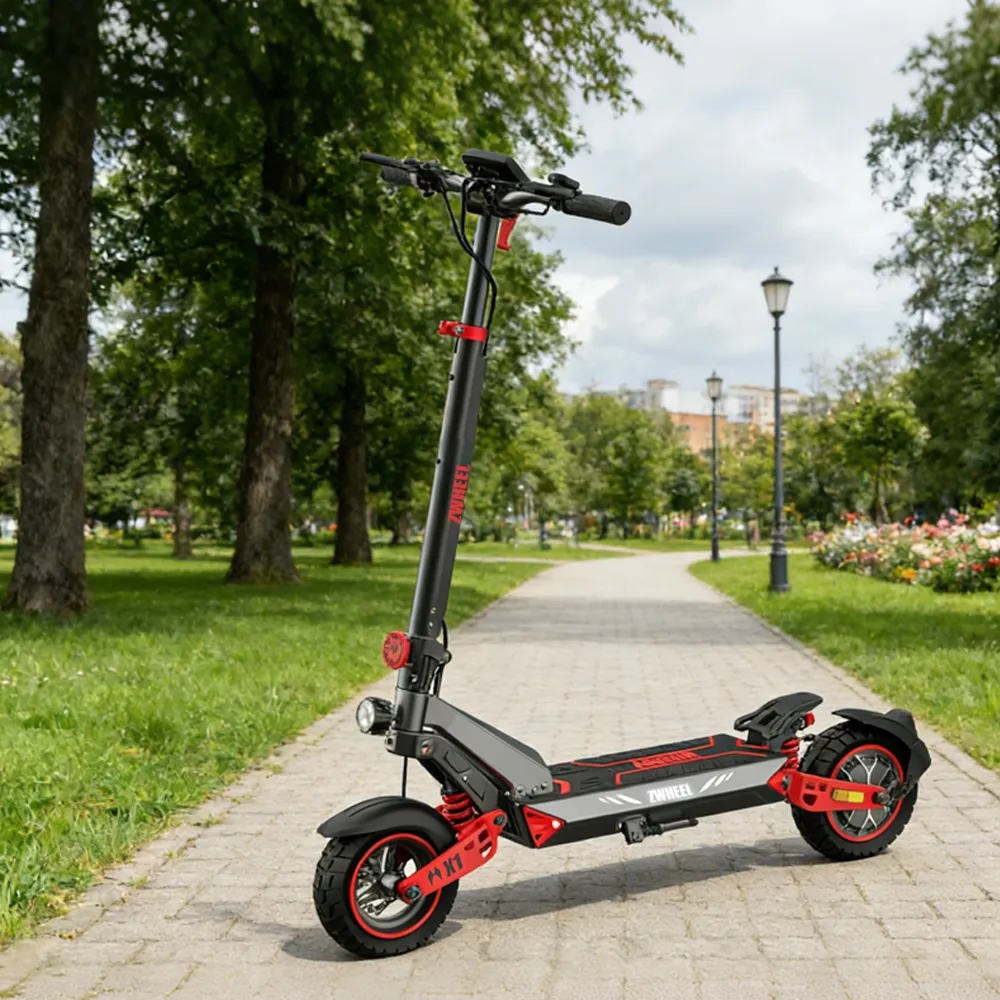
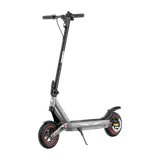
The Zwheel ZSA Plus pairs an 800W motor with dual spring suspension and 10-inch pneumatic tires — a combination that handles the typical urban obstacle course of potholes, expansion joints, and brick crosswalks. At $499, it's a strong entry point for riders who want comfort without overspending.
If you want more power for longer commutes, the Zwheel D3S-S steps up to a 1000W motor with a refined suspension tune that soaks up road chatter at higher speeds. It's a smart pick if your route includes fast arterials with poorly maintained surfaces.
Best for Mixed Terrain and Light Off-Road
Riders who split time between pavement and gravel paths should look at the Zwheel ZSB2. Its 1500W motor and all-terrain suspension geometry are built for exactly this use case — commuting during the week, exploring dirt trails on weekends. The 1200W Zwheel ZSB1 is a slightly more budget-friendly alternative with similar mixed-terrain capability.
Best for Serious Off-Road and Mountain Trails
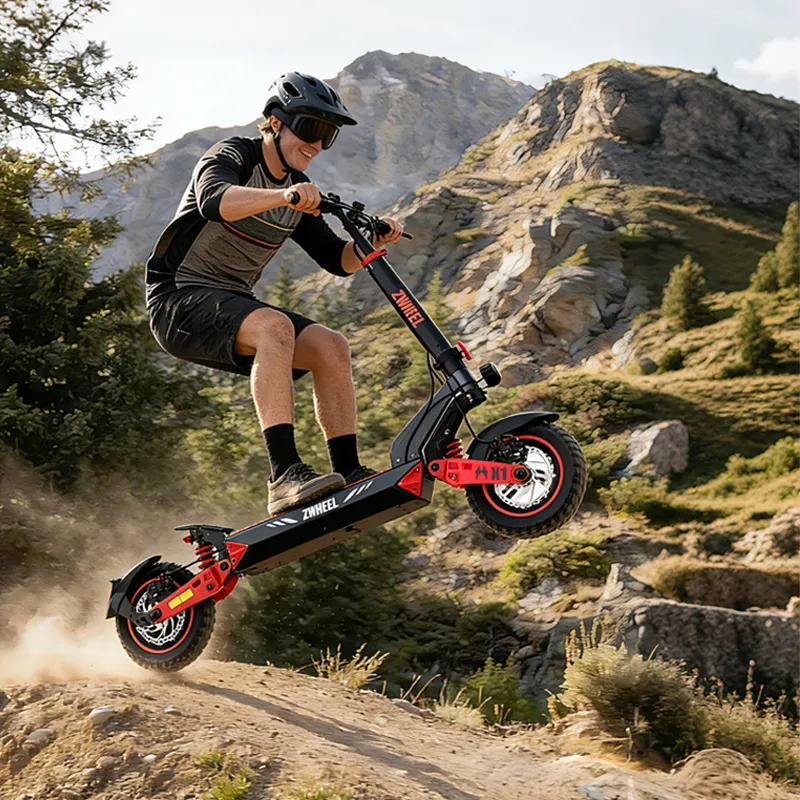
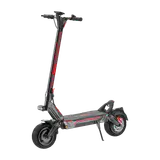
For genuinely rough terrain — rocky trails, forest roads, steep descents — you need long-travel suspension and serious power. The Zwheel ZSD1 (2000W) and Zwheel ZSD2 (4000W) are engineered for mountain use, with suspension travel and frame rigidity that hold up under repeated hard impacts. At the top of the range, the Zwheel ZSE2 (6000W) is a racing-grade machine for riders who want maximum performance on any surface.
Real Numbers: What Suspension Travel Means in Practice
Marketing copy loves vague terms like "advanced suspension." Here's what the numbers actually translate to on the road:
- 30mm travel: Handles small cracks and expansion joints. Still harsh over potholes.
- 50mm travel: Comfortable for most urban riding. Absorbs typical potholes at moderate speed.
- 80mm travel: Noticeably plush. Handles curbs and larger obstacles without bottoming out.
- 100mm+ travel: Off-road territory. Soaks up rocks, roots, and drops.
Keep in mind that travel figures only tell part of the story. A well-damped 60mm suspension can outperform an undamped 80mm setup. That's why test reviews and rider feedback matter as much as spec sheets.
Practical Tips for Riding Rough Roads
Even the best suspension works better with good technique. A few habits that make a real difference:
- Stand with slightly bent knees over rough sections — your legs become a secondary suspension system.
- Reduce speed before obstacles, not during. Braking mid-impact unsettles the chassis.
- Check tire pressure regularly. Slightly lower pressure (within manufacturer range) increases grip and comfort on rough surfaces.
- Inspect suspension components monthly. Look for leaking dampers, worn bushings, and loose bolts — rough roads accelerate wear.
- Upgrade tires before upgrading the scooter. A good set of pneumatic or hybrid tires can transform ride quality for under $60.
Frequently Asked Questions
Is dual suspension really necessary for rough roads?
For anything beyond smooth pavement, yes. Front-only suspension leaves the rear wheel rigid, so impacts travel straight through the deck to your feet and lower back. Dual suspension dramatically improves comfort and control on rough surfaces.
Can I ride an electric scooter on gravel or dirt roads?
You can, but you need the right scooter. Look for 10-inch or larger pneumatic tires, at least 80mm of suspension travel, and a motor rated 1200W or higher. Off-road models like the Zwheel ZSB2 or ZSD1 are designed specifically for this.
How much should I spend on a scooter with good suspension?
Decent dual suspension starts around $500. For genuinely rough roads and off-road use, expect to spend $600–$900. Premium racing and mountain models run $1,000+.
Does suspension affect battery range?
Indirectly, yes. Suspension reduces vibration and keeps tires in better contact with the ground, which can improve traction and efficiency slightly. The effect is minor — typically under 5% — but real.
How often should I service scooter suspension?
For daily rough-road riding, inspect every 1–2 months and do a full service (cleaning, lubrication, damper check) every 6 months or 1,000 miles, whichever comes first.
Final Thoughts
Finding the electric scooter with the best suspension for rough roads comes down to matching suspension travel, damping quality, and tire setup to the surfaces you actually ride. City commuters can get excellent comfort from models like the Zwheel ZSA Plus or D3S-S, while mixed-terrain and off-road riders should step up to longer-travel options like the ZSB2, ZSD1, or ZSD2.
Don't just chase the biggest numbers — think about your daily route, your weight, and how much comfort matters to you. A well-chosen suspension setup turns a jarring commute into a genuinely enjoyable ride, and that's worth far more than a few extra mph on the spec sheet.
Автор
Zwheel Team
Член редакционной команды Zwheel.